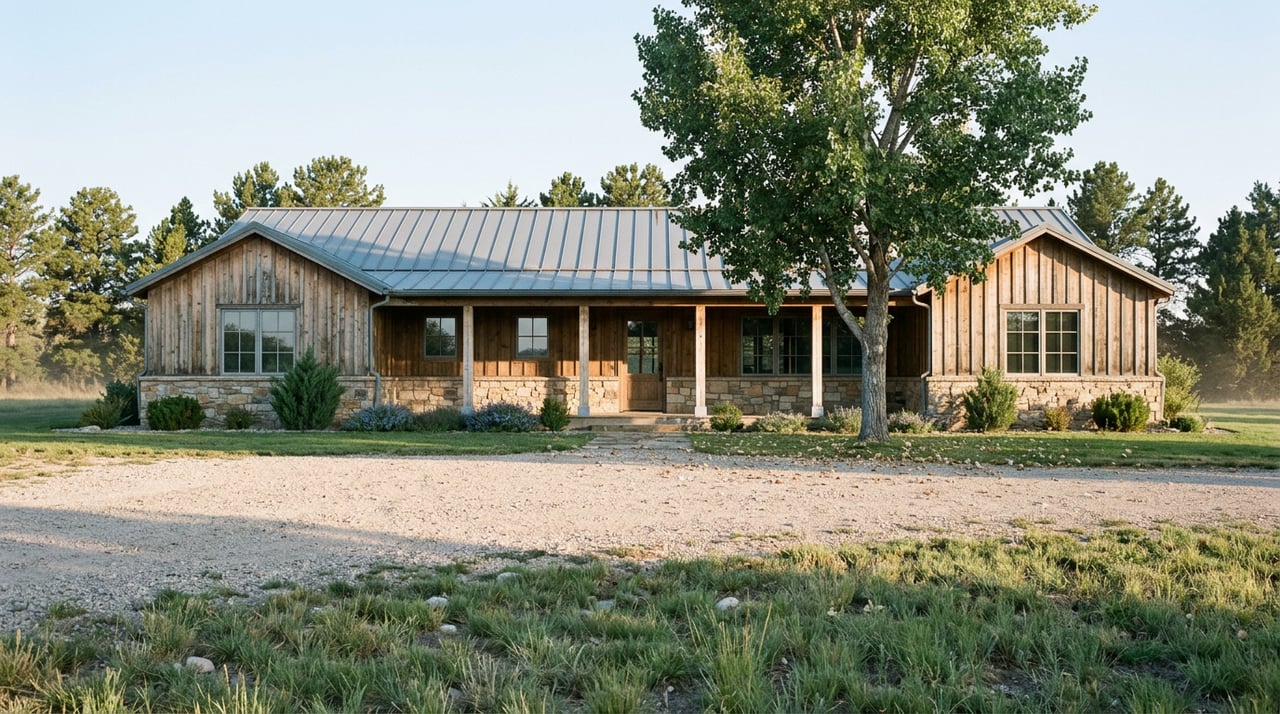
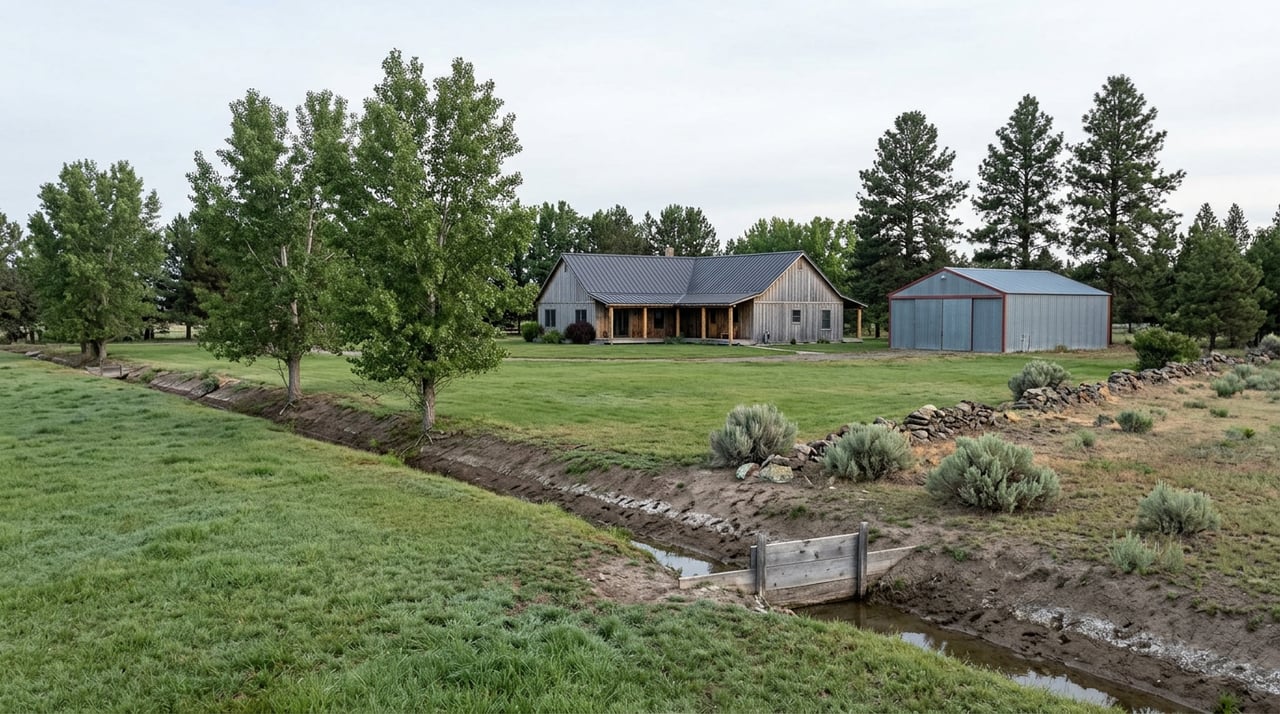
Most buyers read a water share count on a listing the same way they read a garage size or a fence line: as a feature that comes with the property, full stop. On Wright's Mesa, that assumption is the single most expensive mistake a land buyer can make. A share number tells you almost nothing about what you can actually do with the water until you know three other things: when the right was decreed, what use it's restricted to, and whether it's even the same asset that's changing hands at closing.
If you're looking at acreage around Norwood right now, you've probably already seen the language. A listing mentions "10 shares of Gurley water" or "a quarter-cfs irrigation right" the way another might mention a metal roof. It sounds like a checkbox. It isn't one.
The Number on the Listing Isn't the Whole Right
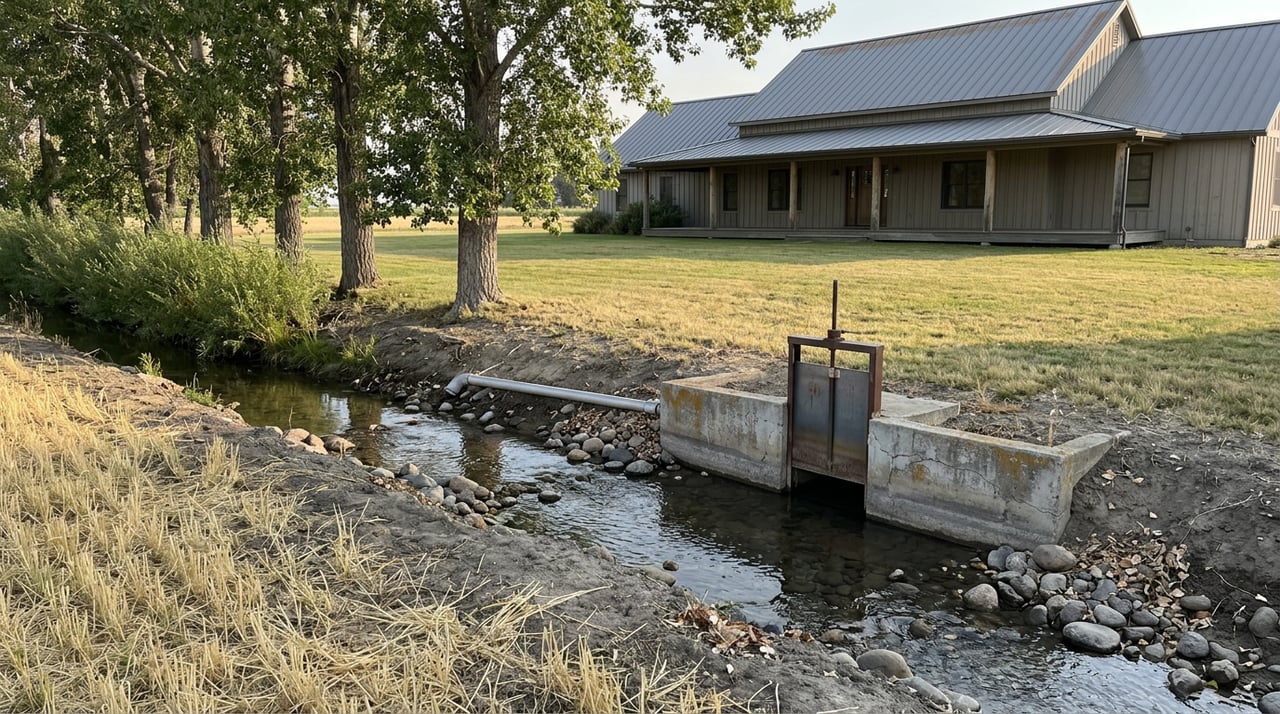
Water in Colorado is a decreed property right, not a utility hookup. A share in a ditch company like Farmers Water Development, which manages the Gurley Ditch and the reservoir behind it, represents a fractional claim on water delivered through a specific system, at specific times, for a specific purpose. The Gurley Reservoir holds about 9,000 acre-feet and irrigates roughly 20,000 acres across Wright's Mesa, but that water only runs when the ditch is in season. Delivery generally starts around mid-April and shuts off by October 1. The rest of the year, the share exists on paper but delivers nothing.
That seasonal window matters more than the raw share count. A buyer picturing a year-round water supply for a greenhouse or a small commercial operation is picturing something the Gurley system was never built to provide.
Prior Appropriation, Plain English
Colorado water law runs on a doctrine that predates the state itself: first in time, first in right. The practical translation for a buyer is that two parcels can hold the identical number of shares and behave completely differently in a dry year, because one right has an older priority date than the other.
| Term on the listing or deed | What it actually controls |
|---|---|
| Share count | Your fractional claim within the ditch company, not a volume guarantee |
| Priority date | Where you fall in line when the river runs short; older beats newer |
| Decreed use | What you're legally allowed to use the water for, set by water court |
| Point of diversion | The specific physical location water is pulled from the system |
| CFS (cubic feet per second) | A rate of flow, used for direct-flow rights rather than storage shares |
When the water table runs tight, junior rights get shut off first, regardless of how many shares appear on the title. That's not a hypothetical. In past drought cycles, the Gurley system has run only through the end of June in some years instead of its normal October cutoff, according to Norwood's own account of its water history. In those years, ranchers on the mesa have had to sell cattle early because the water simply wasn't there.
The Restriction Nobody Mentions at the Open House
Here's the detail that catches buyers off guard most often: Farmers Water Development's own bylaws limit water use under its shares to domestic and irrigation purposes. There are no shares available for industrial activity. If your plan for a parcel involves anything beyond a house and a hayfield, that share count on the listing may not cover it at all, and getting a decreed use changed requires a water court action, not a phone call to the ditch company.
This is worth sitting with before you write an offer that assumes the water solves a business plan. A distillery, a commercial greenhouse operation, a bottling line, any of these would need their own water court proceeding to change the decreed use, and that process is neither fast nor guaranteed.
The Right Doesn't Follow the Deed Automatically
Water in Colorado is treated as a private property right that can be bought, sold, or leased separately from the land it sits on. Sale transactions are recorded at the county level and tracked through title and deed research, the same way a land sale is tracked, but as its own chain of ownership. Developers of subdivided land don't always convey water rights with the parcel. Some assume the buyer will find water elsewhere. Some keep the right for other uses entirely.
Practically, that means the water share mentioned in a listing description needs to be verified as actually transferring, in writing, at closing. Don't take the listing's word for it. Ask the title company to confirm the specific shares are named in the conveyance, not just referenced as an amenity.
When Norwood Had to Defend Its Own Priority Date
If you want proof that these aren't dusty legal abstractions, look at what happened in 2012. After the Colorado Water Conservation Board announced it would file for increased in-stream flows on the San Miguel River, towns and irrigation companies up and down the watershed scrambled to file their own claims first, worried about being left junior to the state's filing. Norwood and the Lone Cone Ditch and Reservoir Company ended up in a dispute with the Town of Telluride over competing filings, and settled rather than fight it out in water court. As part of that settlement, Lone Cone Ditch and Reservoir Company agreed to cap its use of stored water in the Lone Cone Reservoir enlargement and not sell that allocation to outside buyers.
A town government fought and settled over water rights to protect its own priority date. That's the level of seriousness a private landowner should bring to reading a share count on a listing.
Why the Squeeze Is Getting Tighter
Norwood's own water planning documents describe a mesa that's outgrowing its supply even without accounting for new subdivision. During dry years, the Norwood Water Commission has needed up to 28 additional acre-feet just to meet current demand. Looking out toward a projected population near 5,000 by 2050, the town has estimated it could need roughly 430 more acre-feet on top of that, pushing total demand toward 650 acre-feet.
That pressure is why a coalition called the Wright's Mesa Water Planning and Prioritization Project has been meeting for several years now. Its partners include the Town of Norwood, San Miguel County, the West End Economic Development Corporation, the Norwood Water Commission, Farmers Water Development, the Lone Cone Ditch Company, the Norwood Fire Protection District, and the San Miguel Watershed Coalition, working with funding from the Colorado Water Conservation Board. At a coalition meeting in spring 2025 reported by the Telluride Daily Planet's Norwood Post, engineering consultant Donzil Worthington of Bohannan Huston laid out a timeline for a draft regional plan by the end of 2025 and a final version approved by the first quarter of 2026. We haven't seen a published update since confirming whether that plan was finalized on schedule, which is itself worth asking about if you're buying acreage on the mesa.
Norwood Mayor Candy Meehan, who co-founded the water coalition, tried to head off the obvious fear at that meeting.
"No one is asking anyone to give up their water or their control of their water."
Whether that reassurance holds as the regional plan moves toward implementation is exactly the kind of thing a buyer with acreage on the mesa should keep tabs on, not because individual shares are at risk today, but because infrastructure decisions made at that level shape what water is reliably available a decade from now.
Before You Write the Offer
A few questions are worth asking before shares change hands:
- What is the priority date, and is it senior or junior relative to the ditch system's other users?
- What use is decreed, domestic, irrigation, or both, and does that match what you intend to do with the land?
- Is the parcel inside the Norwood Water Commission's service area, or does it rely entirely on ditch shares or a private well?
- Are the specific shares named in the deed and title commitment, not just described in the marketing copy?
- What has actual delivery looked like in a dry year, not just an average one?
For anyone drilling a new well rather than relying on ditch shares, Colorado's Division of Water Resources well permitting page is the place to confirm what a specific parcel is authorized to do before you assume a well is even an option.
A Few Questions We Hear Often
Does buying the land automatically include the water rights? Not necessarily. Water rights can be severed from land and sold or leased separately. Confirm the specific shares are named in your title commitment and deed, not just implied by the listing description.
Can I change how the water is used once I own it? Only through Colorado water court, and only if the change doesn't cause material injury to other water rights in the system. It's a formal legal process, not an administrative update.
What happens to my shares in a drought year? Junior rights get curtailed before senior rights, regardless of share count. Ask about a parcel's priority date and its actual delivery history in recent dry years, not just its decreed entitlement on paper.
Water rights on Wright's Mesa reward buyers who ask specific questions and penalize buyers who assume. If you're evaluating acreage near Norwood and want help reading a title commitment or a ditch company's bylaws before you write an offer, Colorado Land Home & Ranch works this ground regularly. Schedule a consultation and we'll walk through what a specific parcel's water actually gets you.