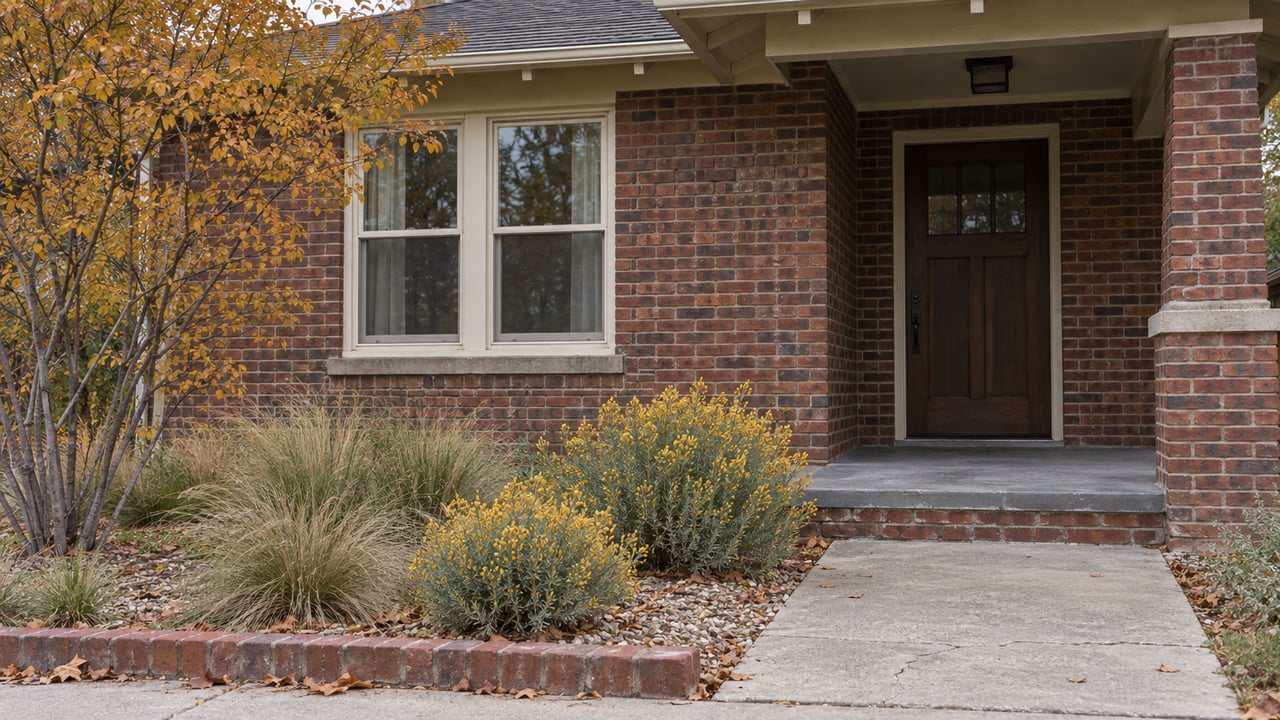

Pull up two Ridgway listings priced within a few thousand dollars of each other this fall. One is an older in-town home on a quiet side street. The other is a new townhome close to downtown, or a lot in the residential and commercial project the town just cleared for construction north of town. On paper, the comparison looks simple: similar price, similar square footage, pick the one you like better.
The comparison sheet won't tell you that one of these properties may carry a second, ongoing property tax obligation that the other doesn't. That difference didn't exist a few weeks ago in the form it exists now, and it traces back to a single town council meeting.
What Ridgway's Town Council Actually Approved on August 12
At its August 12 meeting, the Ridgway Town Council approved the creation of four metropolitan districts for a proposed residential and commercial development on 19 acres in north Ridgway. That's not a zoning change and it's not a building permit. It's the financing structure that will fund the roads, water lines, and sewer for whatever gets built there, and it's the mechanism that will show up on future owners' tax bills for years after the concrete is poured.
The timing lines up with a separate action already on the calendar. A Ridgway public hearing set for Wednesday, September 16 at 5:30pm covers three related items: a site plan and conditional use permit for something called Riverbend Townhomes on Liddell Drive, a plat amendment for the adjoining Riverview Business Park Subdivision, and a PUD amendment for the existing Lena Street Commons development on North Lena Street. Two of those three, a residential townhome project paired with an adjoining business park on the same street, match the description of the 19-acre north Ridgway project almost exactly. Whether or not they turn out to be the same parcel, the pattern is the same: Ridgway is approving new residential and commercial inventory faster than most buyers are learning how the financing behind it works.
Lena Street Commons itself isn't new. It's an existing mountain modern townhome development in the heart of Ridgway, built in clusters of four residential buildings with four to five units each, plus four commercial-zoned units marketed as a rare opportunity given how little existing commercial space Ridgway has. The fact that its PUD is being amended on the same night as a brand-new project's site plan review is a reminder that "already built" doesn't mean "finished changing," and it's a reason for any buyer looking at a resale there to ask what the amendment actually changes before assuming the property's obligations are settled.
What a Metropolitan District Actually Does to a Tax Bill
A metropolitan district in Colorado is not a homeowners association, even though the two get confused constantly. It's a unit of local government, formed under Title 32 of the Colorado Revised Statutes, with its own elected board, its own public meetings, and its own authority to issue bonds and levy property tax. A developer petitions to form the district, the district issues bonds to pay for infrastructure up front, and the homeowners who move in later repay that debt through a mill levy added to their county property tax bill. It doesn't arrive as a separate invoice or a line in an HOA packet. It's baked into the same bill that funds the school district and the county, which is exactly why it's easy to miss when you're comparing listings by price alone.
Elsewhere in Colorado, where most of these districts have been used for two decades of suburban growth, service plans commonly cap the debt service portion of the levy around 50 mills, with a separate operating and maintenance levy layered on top, and repayment terms that can run up to 40 years. The obligation doesn't belong to the developer once the bonds are sold. It belongs to whoever owns the property, for as long as the debt is outstanding, regardless of who built the house or who lived there first.
Ridgway's four new districts were only approved this August. Their certified mill levy won't appear on a Ouray County tax bill until debt is actually issued against them, which means the number isn't public yet in the way a listing price is. That's not a loophole. It's exactly why Colorado's disclosure law exists, and why it matters that a buyer knows to ask for the service plan's mill levy cap before that first certified bill arrives, not after.
The Two-Tier Disclosure Law Behind the Numbers
Colorado tightened these disclosure rules in stages, and the stage that applies to a given Ridgway purchase depends on whether the home is newly built or a resale.
| Situation | What the law requires |
|---|---|
| Newly constructed home inside a metro district (rule in effect since January 1, 2022) | Seller must disclose the maximum debt service mill levy allowed under the service plan, whether a separate operating and maintenance levy applies, whether the cap can be adjusted by assessment ratio changes, and a dollar estimate of that year's district property taxes based on the purchase price. Seller must also hand over the county's current certificate of taxes due. |
| Any residential resale inside a district organized after January 1, 2000 (rule in effect since January 1, 2024) | Seller must point the buyer to the district's official public website, which state law requires every qualifying district to maintain with its budgets, board meeting schedule, and plain-language description of services. |
In plain terms: buy a brand-new home inside one of Ridgway's four new districts, and you're legally owed a specific dollar figure before you close. Buy a resale in a district formed after 2000, including potentially a unit at a development like Lena Street Commons if it turns out to sit inside one, and you're owed a pointer to the district's website rather than a pre-calculated number. Neither disclosure happens automatically just because you asked about the property tax on the listing sheet. Both require asking the right question at the right point in the transaction.
What This Means If You're Comparing Listings This Fall
If you're looking at the new north Ridgway project, Riverbend Townhomes, or a resale at Lena Street Commons, the practical sequence looks like this:
- Ask directly whether the specific unit or lot sits inside a metropolitan district. New construction in a growing area doesn't automatically mean it does, and an older development can be added to one through later annexation or amendment.
- If it's new construction, request the service plan's maximum debt service mill levy in writing, along with the same-year dollar estimate the seller is required to provide.
- If it's a resale in a district formed since 2000, ask for the district's public website address and read its most recent budget and board minutes before you write an offer.
- Pull the county's current certificate of taxes due yourself rather than relying on the listing's stated tax figure, which may reflect a prior owner's assessment or predate the district's first certified levy entirely.
- For any Ridgway property outside town limits or tied to well, septic, or shared road access, the same due diligence discipline applies to utilities and legal access as it does to tax structure. We've written before about how to evaluate access, power, water, and septic for Ridgway-area properties, and the same principle holds here: two properties that look alike on a map can carry very different long-term obligations.
None of this means new construction in Ridgway is a bad option. New infrastructure has to get paid for somehow, and a metro district spreads that cost across the homeowners who benefit from it rather than the whole town's tax base. But it does mean that comparing two Ridgway listings by price per square foot alone, without asking which one carries a district obligation, is comparing two different products as if they were the same one.
A Few Questions We Hear Often
Does this only apply to brand-new homes? No. The full financial disclosure with a dollar estimate applies to newly constructed homes. But since January 2024, any residential resale inside a district formed after 2000 also triggers a disclosure, specifically a requirement to point the buyer to the district's public website.
What happens once the district pays off its bonds? The debt service portion of the mill levy is structured to end once the bonds are retired, typically within the term set in the service plan. An operating and maintenance levy can continue separately for as long as the district provides services like street or park maintenance, so a district's total mill levy doesn't necessarily drop to zero even after the original construction debt is gone.
Are all four of Ridgway's new districts going to apply to every lot in the 19-acre project? Not necessarily. Districts are often structured to cover different subareas or phases of a larger project, and boundaries can be checked through the title commitment and county parcel records rather than assumed from a development's marketing materials.
Rural and small-town property transactions in Western Colorado rarely come down to price alone, and Ridgway's next wave of new construction is a clear example of why. If you're weighing a new build against an existing home here, or trying to make sense of a service plan before you write an offer, Colorado Land Home & Ranch can walk through the specific numbers with you before you're standing at a closing table with a surprise. Schedule a consultation and let's look at the actual paperwork together.