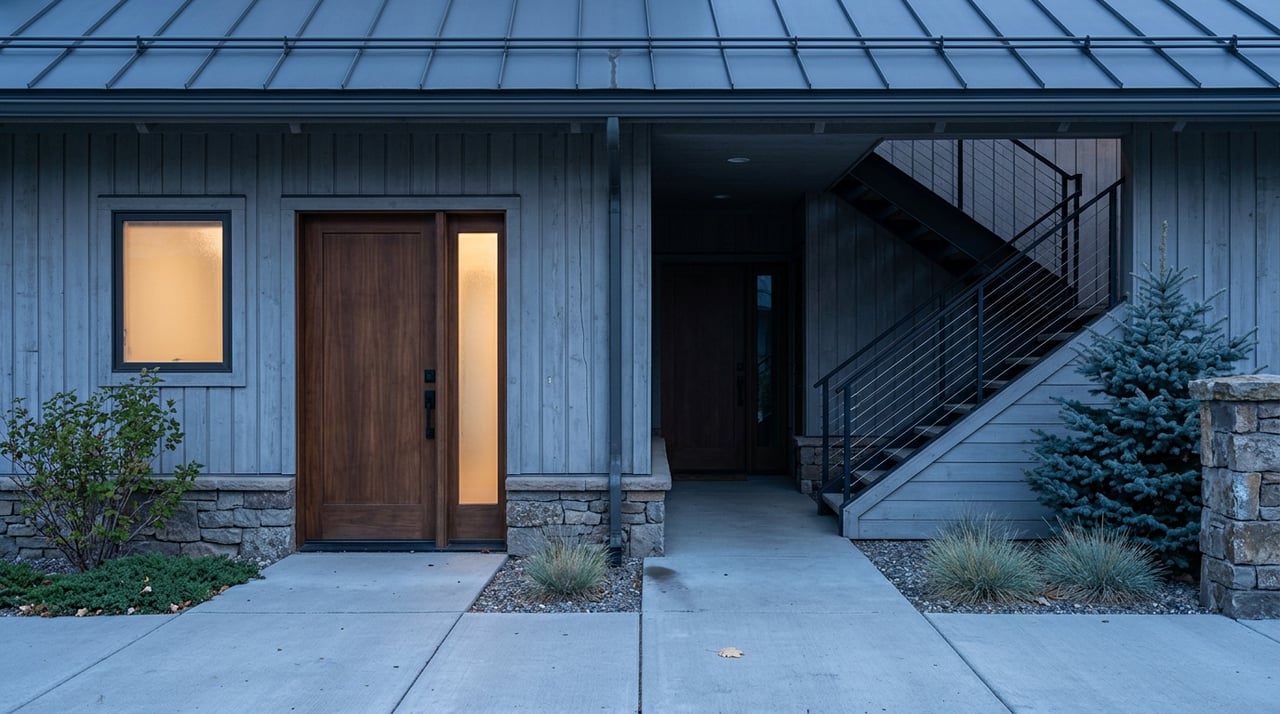
On April 24, 2026, a handful of qualified households gathered at Rebekah Hall in Telluride for a drawing. Not a raffle for a truck or a vacation. A housing lottery, run by the San Miguel Regional Housing Authority, for three condominiums: Silver Jack 202, a three-bedroom at 155 W Pacific Avenue priced at $405,507, Silver Jack 205 next door at $368,620, and Element 52 SW-102 on S Davis Street at $352,529. Winners had three days from being contacted to sign a purchase agreement or lose the unit.
Around the same time, Redfin was reporting a three-month median sale price for Telluride homes of $4.7 million, up 27 percent year over year. Movoto had the August 2026 median list price at $2.95 million. A local brokerage blog put the June 2026 San Miguel County median closed sale near $5.78 million.
Those aren't rounding errors or bad data. They're two different housing markets that happen to share a ZIP code, and if you're comparing Telluride to Ridgway, Ouray, or anywhere else on the Western Slope, the gap between those numbers matters more than either number on its own.
Why the medians don't agree
Part of the spread is simple math on a thin market. A local brokerage covering San Miguel County noted that in a low-volume luxury segment, sometimes only two sales close in a month, so a single ultra-luxury transaction can pull the median up sharply. That explains why the county figure jumped by something like 65 percent year over year while other measures moved less.
The rest of the spread comes down to what each number is actually counting. One widely cited home-value index puts the typical Telluride home closer to $1.91 million, a figure that reflects a broader mix of local inventory, smaller condos and row houses sitting in the same dataset as sprawling single-family estates. Redfin's own price-per-square-foot figure moved from roughly $1,840 to $2,550 within the same year, a swing large enough on its own to show how few transactions are steering the average in a market this thin.
Neither number is wrong. They're drawing from different slices of the same town, and neither one tells you whether a deed-restricted sale like Silver Jack 202 is mixed into the pool or filtered out. The providers don't spell that out. What's clear is that the properties feeding these indexes range from a 479-square-foot price-capped condo to a ski-in estate, and a single average or median can't hold both without distortion.
Two markets, side by side
Telluride's housing stock splits into two pools that operate under almost entirely different rules.
| Free market | Deed-restricted | |
|---|---|---|
| Recent price per square foot | Roughly $1,840 to $2,550 (Redfin, 2026) | Roughly $305 to $736 (SMRHA lottery units, 2026) |
| Who can buy | Any qualified buyer | Households meeting SMRHA or Town employment and income thresholds |
| Annual appreciation | Market-driven | Capped at 3% in Telluride (may be less); 4% under Mountain Village's Employee Housing Restriction |
| Short-term rental | Allowed where zoning permits | Prohibited, including individual rooms |
| Purchase process | Standard offer and negotiation | Lottery drawing, three-day decision window after selection |
| Transfer tax | Applies | Exempt |
Mountain Village runs a related but distinct program. Instead of building separate price-capped units, its Employee Housing Restriction lets a qualifying buyer, someone working 1,560 or more hours a year inside the Telluride R-1 School District, negotiate a deed restriction with the town valued at roughly 15 to 18 percent of the home's value, capped at $200,000, in exchange for keeping the appreciation cap in place. Different mechanism, same underlying idea: the restriction trades long-term price growth for a lower entry cost today.
The hour count that moves with the snowpack
Here's the part that surprises most buyers: eligibility for some of this restricted housing isn't fixed. It moves with how the resort's season goes.
In March 2026, the Telluride Housing Authority temporarily lowered the annual work-hour requirement for Town-owned employee rental housing from 1,400 hours to 1,200 hours for leases signed during 2026. The stated reason was direct: a ski resort closure and a low-snow season had already cut into local work hours, and the housing authority didn't want people losing rental eligibility because of a season nobody could control.
That season was rough by any measure. Telluride Ski and Golf shut down entirely for several days in late December 2025 amid a ski patrol strike, an event Colorado Sun covered in detail as patrollers picketed near the gondola station. Then came a snowpack that Colorado Sun described as the worst in 50 years, with resorts across the state closing early and Telluride finishing its season on April 5 with roughly half its terrain open on a 35-inch base.
Neither event touched the ownership side of the deed-restricted program. But the rental-side adjustment is worth knowing if you're weighing Telluride against a market like Montrose or Delta, where housing eligibility isn't tethered to snowfall or a labor dispute at the local employer. In Telluride, it can be.
What "scarcity" actually looks like here
The free-market side isn't behaving like a typical hot resort market either, despite the price growth. One brokerage's snapshot from late May 2026 put roughly 90 active Telluride listings at a median list price near $3,175,000 and an average of about $1,934 per square foot, with a median time on market of 291 days. In most metro markets, nine months on market signals a serious buyer's market. In Telluride, it reflects something else: a small pool of sellers who aren't under pressure to sell, some pricing aspirationally at the top end, and a genuinely constrained supply of land inside town limits and the historic district.
Redfin's numbers point the same direction from a different angle. The average home there sells for about 6 percent below list price and takes around 78 days to go pending, with multiple offers described as rare. That's not indecision. It's a market where a handful of truly unique properties, an entitled in-town lot, a real ski-in/ski-out condo, a protected-view estate, move quickly because buyers for them have few substitutes, while everything else waits for the right match.
What this means if you're comparing towns
If you're cross-shopping Telluride against Ridgway, Ouray, or Montrose, the practical takeaway isn't which median is "true." It's figuring out which of Telluride's two markets you're actually shopping in before you get attached to a number.
If you're shopping in the free-market pool and short-term rental flexibility or resale upside matter to you, the relevant comparisons are the per-square-foot figures and the 291-day patience test, not the county's headline median. Telluride's median household income was reported at $104,167 in 2024, a bit above the Colorado state median. That gap between local wages and multi-million dollar list prices means most free-market buyers here are bringing wealth earned somewhere else, which is a normal feature of a resort and second-home market, not a flaw in it.
The deed-restricted program is worth a serious look precisely because it trades appreciation for accessibility. A 3 percent annual cap sounds modest next to double-digit free-market gains, but it comes with a purchase price that's a fraction of the town's headline numbers and no property transfer tax on the way in.
A few questions that come up often
Can someone who doesn't work in Telluride buy a deed-restricted unit? No. Eligibility depends on employment hours, income limits tied to area median income, and residency requirements set by SMRHA or the relevant town program. Renters must requalify every year, and owners are subject to periodic compliance checks.
If I win a housing lottery, can I change my mind? You have three days from being contacted to decide whether to sign a purchase agreement.
Does a deed-restricted home appreciate at all? Some. Resale price growth is capped at 3 percent per year under Telluride's guidelines, and may be less depending on economic conditions, compared with a 4 percent cap under Mountain Village's Employee Housing Restriction. Either way, the ceiling is set by formula, not by the open market.
If you're trying to figure out which side of this market actually fits your budget, your work situation, or your plans for the property, that's exactly the kind of local detail worth a real conversation before you write an offer. Teddy Berger and the team can walk through what's currently available on both sides of the Telluride market and help you figure out where you'd actually qualify. Schedule a Consultation to get started.
This article is general information, not legal, tax or financial advice. Consult a qualified professional about your situation.