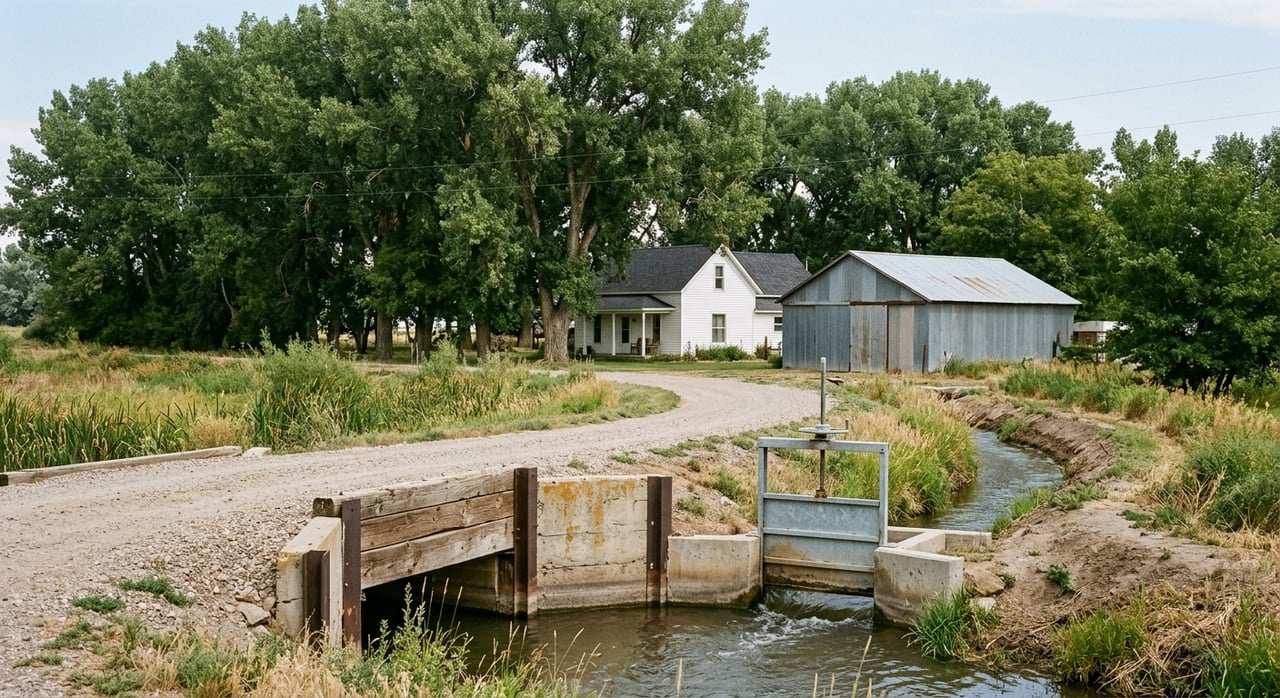
Buying acreage or farmland in Delta can feel simple at first glance. You see open ground, irrigation lines, a driveway, and maybe even a well, and it is easy to assume the basics are already covered. In reality, rural property due diligence often comes down to details you cannot afford to guess on. This checklist will help you focus on the questions that matter most before you close, so you can move forward with more clarity and fewer surprises. Let’s dive in.
Start With Parcel Basics
Before you think about building, farming, or improving the property, confirm exactly what you are buying. In Delta County, the GIS and Mapping system is a useful first stop because it includes parcel layers, roads, zoning, address points, water companies, and aerial imagery.
That said, maps are only the start. Colorado State University Extension notes that fences, creeks, and other visible features may not match the legal boundary, so it is smart to compare county records with the deed and, if possible, a current survey. This is also the time to look for road, utility, and irrigation easements that could affect how you use the land.
Parcel checklist
- Review the parcel in the county GIS system
- Compare the legal description to the deed and assessor information
- Ask whether a current survey is available
- Identify any road, utility, ditch, or irrigation easements
- Confirm whether nearby municipal boundaries or agreements could affect review
Verify Legal Access
A gravel drive or gate does not automatically mean you have approved legal access. Delta County specifically states that an existing access point does not mean it is an approved access location, and access from a county road must be permitted and built to county standards.
This matters because access issues often surface late, right when you are trying to finance, build, or improve the property. In many cases, parcels are limited to one access, so you want to know early what is allowed and what may need review through the county’s Right-of-Way Permit process.
Access questions to ask
- Does the parcel have legal recorded access, not just physical access?
- Is the current driveway an approved access point?
- Is access from a county road or a private easement?
- If the parcel connects to a state highway, will a CDOT permit be required?
Check Zoning And Land Use Rules
Delta County guidance notes that unincorporated areas generally do not require a building permit, but development still must comply with the Land Use Code. That is an important distinction for acreage buyers, because no building permit does not mean no rules.
If a parcel is near a municipality, extra review may apply through intergovernmental agreements or urban growth area rules. Before you buy, verify whether your plans for a home, shop, agricultural use, guest house, or other improvements fit the property’s zoning and land use requirements.
Land use items to confirm
- Current zoning and allowed uses
- Any subdivision plat restrictions or deed restrictions
- HOA rules, if applicable
- Whether your planned structures trigger additional review
- Whether each livable structure will need its own address
Understand Water Supply First
In Colorado, water is its own category of due diligence. The state administers water under prior appropriation, and the Colorado Division of Water Resources says every new well that diverts groundwater must have a permit.
If the property includes a well, pull the permit file before closing through the state’s well permitting resources. The permit file can show allowed uses, construction details, and pump records. That matters if you are planning domestic use, livestock, gardens, or future improvements.
Delta County also states that development must show an adequate domestic water supply. Wells cannot provide water across property lines without a state-approved augmentation plan, and hauled-water cisterns generally do not count as an adequate supply.
Water supply checklist
- Confirm whether domestic water comes from a well, water provider, or another approved source
- Pull the well permit file and review allowed uses
- Ask if an augmentation plan is required for your intended use
- Verify whether the current setup supports livestock, lawn, or garden use
- Check review timing if a new or replacement well application may be needed
Separate Irrigation Water From Domestic Water
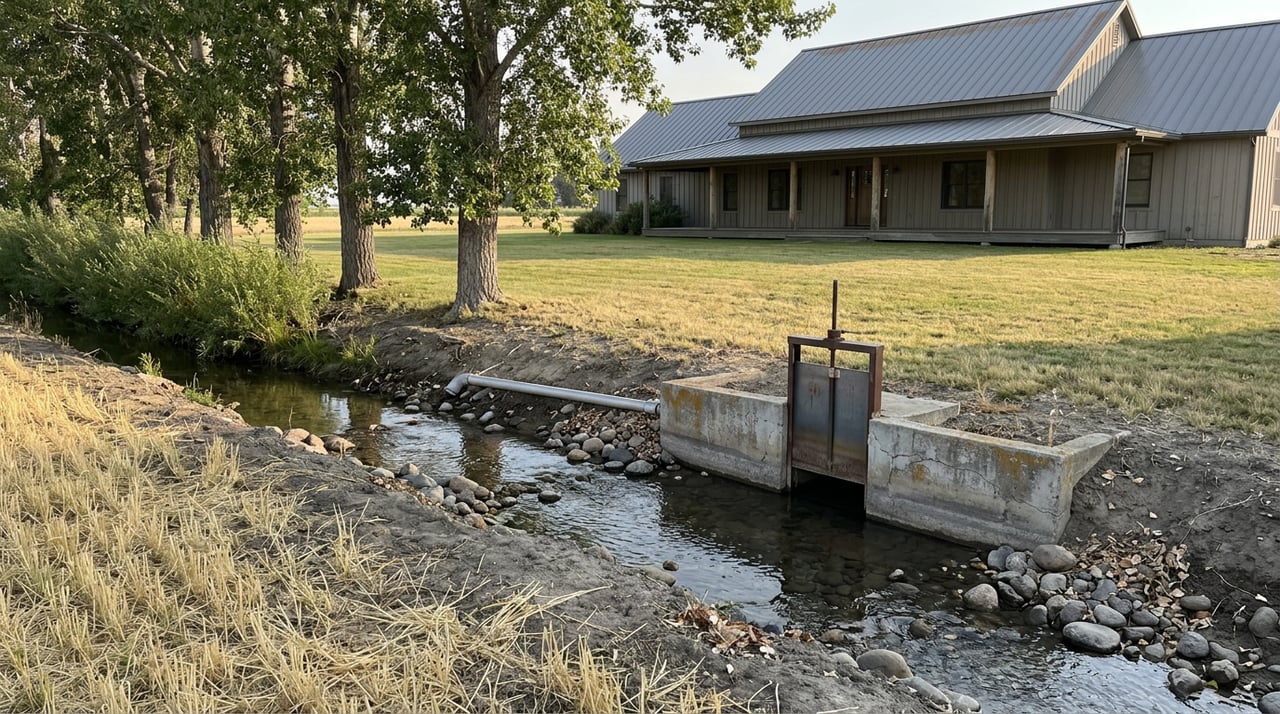
One of the biggest mistakes acreage buyers make is assuming irrigation water and household water are the same thing. They are not. A domestic well may not cover irrigation needs, and irrigation rights may depend on ditch shares, district entitlements, or delivery rules.
If the property is served by Orchard City Irrigation District, review the district’s new property owner information. The district explains that water is ordered by headgate and entitlement, service usually runs from about April through October depending on conditions, and water allocated to a parcel cannot be permanently transferred off the land, only temporarily leased. It also notes a minimum order of 0.25 cfs for at least two days.
Irrigation checklist
- Ask whether irrigation water is tied to the parcel, a ditch share, or district membership
- Request copies of ditch agreements, share documents, or district records
- Confirm seasonal delivery timing and ordering rules
- Ask who maintains laterals, ditches, headgates, or delivery structures
- Verify whether the delivery system fits your intended use of the land
Test Water Quality Separately
Water quantity and water quality are different questions. Delta County states that it does not regulate or test private wells, so buyers should not assume a working well means the water has been recently evaluated.
Colorado State University Extension recommends regular private well testing and annual nitrate testing. Its rural property guidance also suggests checking nearby contamination risks such as septic spacing, abandoned wells, fuel tanks, and pesticide storage.
Water quality checklist
- Ask for any recent private well test results
- Plan for independent water testing if no recent records exist
- Review nearby septic locations and spacing concerns
- Look for abandoned wells, fuel tanks, or chemical storage areas
- Treat potability and flow rate as separate issues
Review Floodplain Risk Early
Floodplain questions should come up at the start of your due diligence, not at the end. Delta County requires a floodplain development permit for work in mapped floodplain or floodway areas and points property owners to county flood resources and FEMA mapping through its Floodplain Permits and Forms page.
Floodplain status can affect where you build, where septic can go, and how much extra review may be needed. If the parcel is in a mapped flood area, get clarity on limitations before you make plans around a homesite or major improvements.
Floodplain checklist
- Check county and FEMA flood mapping for the parcel
- Ask what building limitations apply in mapped flood areas
- Confirm whether septic review is affected by floodplain location
- Factor floodplain constraints into homesite planning early
Study Soils And Drainage
A parcel can look flat, green, and usable while still hiding expensive soil or drainage issues. The USDA Natural Resources Conservation Service says soil surveys can help you evaluate depth to water table, flooding and ponding, pH, slope, texture, depth to bedrock, and other conditions that affect building and agricultural use.
For a more exact review, use the official Web Soil Survey for the specific parcel or area of interest. This is especially important if you are planning a homesite, septic system, pasture, irrigation improvements, or outbuildings. CSU Extension also advises buyers to watch for alkaline, saline, wet, or expansive soils that can affect foundations, paving, and land productivity.
Soil and drainage checklist
- Review the parcel in Web Soil Survey
- Look at slope, depth to water table, and flooding or ponding risks
- Check for alkaline, saline, wet, or expansive soils
- Ask how irrigation may affect drainage or high water table conditions
- Consider an onsite review if the intended use depends on specific soil performance
Plan For Septic And Site Improvements
If the property is not served by a public sewer system, wastewater planning matters. Delta County outlines a Septic Permit Process that includes hiring an OWTS engineer, submitting the application and design, receiving a conditional permit, and scheduling a final inspection.
The county also flags related issues that can affect your timeline, including floodplain review, stormwater permits for ground disturbance of one acre or more, and CDOT access permits for parcels served by a state highway. If you are planning more than one livable structure, confirm wastewater capacity and addressing requirements before closing.
Improvement checklist
- Ask whether an OWTS permit will be needed for your plans
- Verify if a floodplain review is required before septic work
- Check whether disturbing one acre or more triggers stormwater requirements
- Confirm address requirements for each livable structure
- Review access permit needs if the parcel fronts a state highway
Review Title, Easements, And Restrictions
Acreage purchases often involve documents that do not come up as often in standard in-town transactions. CSU Extension recommends reviewing the deed, access-road ownership, permanent access easements, HOA documents, ditch easements, utility easements, and subdivision plats before closing.
This is also where you confirm whether any recorded restriction affects fencing, structures, water use, road maintenance, or agricultural activities. If you plan to keep animals, Extension also notes Colorado’s open-range rule, which means landowners who do not want livestock on their property are responsible for fencing them out.
Document checklist
- Review title work carefully
- Confirm all access and utility easements in writing
- Request ditch, irrigation, and water-related documents
- Check subdivision plats, CCRs, or HOA documents if applicable
- Ask whether fencing and livestock concerns affect the property
Build Your Due Diligence Team
Rural purchases usually go more smoothly when you talk with the right local offices and specialists early. In Delta County, that can include Planning and Community Development, Environmental Health, GIS staff, and road or access staff, depending on the property.
You may also benefit from guidance through Tri River Area CSU Extension agricultural land resources or the local irrigation district if the parcel is served by ditch water. These conversations can help you match the property’s real-world limitations and opportunities to the way you actually plan to use it.
A Simple Buyer Checklist For Delta Acreage
If you want a quick version to carry into showings and due diligence, start here:
- Confirm parcel boundaries with GIS, title, and survey records
- Verify legal access and approved driveway status
- Check zoning, plats, deed restrictions, and land use rules
- Review floodplain mapping before planning any homesite
- Pull the well permit file and confirm allowed uses
- Ask whether an augmentation plan is needed
- Separate domestic water questions from irrigation water questions
- Request ditch share, district, or irrigation delivery documents
- Review water quality testing, not just well existence
- Study soils, drainage, salinity, and water table conditions
- Understand septic, stormwater, and access permit requirements
- Review easements, road maintenance, and livestock fencing issues
Buying land in Delta can open the door to farming, rural living, and long-term investment potential, but only if the property truly fits your goals. Careful due diligence helps you avoid costly surprises and gives you a clearer path from contract to closing. If you want local guidance on evaluating acreage, farmland, or rural homesites on the Western Slope, connect with Teddy Berger for practical, boots-on-the-ground support.
FAQs
What should you verify first when buying acreage in Delta, Colorado?
- Start with parcel boundaries, legal access, zoning, and water supply so you know the property’s basic legal and practical limits before moving deeper into inspections.
How do you confirm legal access for a Delta County land parcel?
- Check recorded easements, county road access approvals, and driveway permit status, because a visible driveway does not always mean the access is legally approved.
Why does a well permit matter for Delta farmland buyers?
- A well permit shows the allowed uses and construction details, which can affect whether the water supply fits your plans for a home, animals, gardens, or other improvements.
What should you ask about irrigation water on Delta acreage?
- Ask whether irrigation water is tied to the parcel, a ditch share, or a district entitlement, and request the ordering rules, delivery timing, and maintenance responsibilities.
How do soil conditions affect farmland or acreage purchases in Delta?
- Soil conditions can affect septic design, building costs, drainage, pasture productivity, irrigation performance, and whether a homesite works as planned.
Do Delta County acreage properties need septic and floodplain review?
- Many rural parcels will need OWTS review for septic, and any parcel in a mapped floodplain may face added limits or permit requirements before development.
What documents should you review before closing on Delta farmland?
- Review title work, surveys, deeds, easements, irrigation records, well documents, subdivision plats, and any HOA or recorded restrictions that affect land use or access.
Who can help with Delta rural property due diligence?
- Helpful contacts can include Delta County planning, environmental health, GIS and access staff, CSU Extension, NRCS resources, and the relevant ditch company or irrigation district.